


OK so I am trying to look down the road here. Reason cutting and splitting wood is getting harder every year, soooo I am wondering about pellet stoves. I know nothing about them other than you buy bags of pellets and dump them and they make heat. Brands some good some not so good and some junk, so any in put on them will be OK, and buying pellets where, and what kind burn times ECT. Also the fire place in the living room is where Im thinking. It has a 6 inch flu Im thinking will need to be reduced, , how much of a set back can I use to exhaust gases up the flu. Yeah I know a lot of questions but I really know nothing about them
A tad bit early I know
- Thread starter skeets
- Start date

OK so I am trying to look down the road here. Reason cutting and splitting wood is getting harder every year, soooo I am wondering about pellet stoves. I know nothing about them other than you buy bags of pellets and dump them and they make heat. Brands some good some not so good and some junk, so any in put on them will be OK, and buying pellets where, and what kind burn times ECT. Also the fire place in the living room is where Im thinking. It has a 6 inch flu Im thinking will need to be reduced, , how much of a set back can I use to exhaust gases up the flu. Yeah I know a lot of questions but I really know nothing about them
AGP Pellet Stove | Premium Steel Stoves | Made in USA | Lopi Stoves®
INNOVATIONS OPERATION & MAINTENANCE VIDEO HORIZONTAL ROTARY DISC (HRD) ×Homeowner's VideoCloseSelect:SpecificationsInstallation DrawingsDimension DrawingDocumentsSelect: Heating Capacity*: Up to 2,000 square feet Emissions: 1.8 Grams Per Hour Hopper Capacity: 80 Lbs Maximum Burn Time: Up to 57...
 www.lopistoves.com

I don't have answers to all of your questions either, but I would not go back to a wood stove which I used for longer than I like to think about.
Pellet stove does not supply the radiant heat of a wood stove. a pellet stove is more like a hot air system, which I do miss with the wood stove.
However, the convivence of the pellet stove is worth it for me. Much less work involved than with a wood stove. No wood to handle multiple times, and a lot less ash to clean out, no worry about insects in the wood getting nice and warm in the house and liking it, much less storage space, and overall, just easier.
As I look at it, it's like feeding chickens, you just feed it a bag of feed. You get no eggs, but heat instead.
I also can control mine by a programmable thermostat which you can't do with a woodstove.
Woodstove-a warmer radiant heat. Pellet stove-everything mentioned above.
Pellet stove does not supply the radiant heat of a wood stove. a pellet stove is more like a hot air system, which I do miss with the wood stove.
However, the convivence of the pellet stove is worth it for me. Much less work involved than with a wood stove. No wood to handle multiple times, and a lot less ash to clean out, no worry about insects in the wood getting nice and warm in the house and liking it, much less storage space, and overall, just easier.
As I look at it, it's like feeding chickens, you just feed it a bag of feed. You get no eggs, but heat instead.
I also can control mine by a programmable thermostat which you can't do with a woodstove.
Woodstove-a warmer radiant heat. Pellet stove-everything mentioned above.


My one BIL had a pellet stove that was supposed to be able to burn corn. He had lots of trouble because he couldn't get the moisture content low enough and keep it there. Then he went with an LPG furnace.
We burned self cut, split, and carried wood for 35 years. We graduated to a propane furnace, added a 500 gal. propane tank and then a 20 Kw Kohler generator. Many problems solved.
I went to a pellet stove in 2017, after a lifetime of burning wood. For only one reason - firewood was getting difficult to get here in northern Nevada. For 10 years I was buying my firewood in Burns, Oregon (nearest region with large forests), making a 480 mile round trip to get a load of wood. Then even that source was drying up. Most forests here in the west are on public land run by the Federal government and they issue permits to cut wood. Depending on who is in office in Washington, permits can be difficult to get.
Anyway, after a bunch of research, talking to people who owned pellet stoves, etc., I ended up installing a Harman P68 pellet stove. So far, it has been trouble free. My observations:
As someone said above, the biggest change I had to get used to was no continuous heat . The stove is controlled by a thermostat so the stove will come on and then turn off. When it turns off heat is gone immediately - especially if you have a ceiling fan to move air around the house, you will feel that loss of heat. I was so used to a warm stove providing constant heat that this hot-then-cold cycling was (and still is) hard to get used to. Temperature in the house can change by 5 degrees before the thermostat turns the pellet stove back on.
Noise. A wood stove is essentially silent. A pellet stove has 3 motors and the distribution fan especially is very audible, at least on my Harman. But then I'm used to a very quiet house. I don't have a TV or stereo going all the time and when the pellet stove turns on I can hear it and find the noise annoying.
Power. Whereas a wood stove needs no power, a pellet stove will not work without electricity to run the motors, especially that noisy fan that blows out the hot air. Area where I live has a lot of power outages and when the power goes out the pellet stove shuts down. I ended up porting power through the house wall so I could put a generator out on my deck to run the stove during power outages. Better than running a cord through a door or window and letting out what heat there was!
Cleaning. The Harman tells you to scrape the burn pot (part where the pellets burn) daily. But that takes only a minute. Once a week they recommend a general cleaning and emptying the ash pan if needed. Burning premium wood pellets (yes, there are several different grades of pellets) produces very little ash. After a season I may have a five gallon bucket of ash. It is necessary to clean the flue only once per year - and then all I get is perhaps a quart of very fine dust. No creosote.
Speaking of flue...I believe all pellet stoves take either a 3" or 4" flue. My house had a 8" flue for the wood stove and all I had to do was buy an 4" to 8" adapter to connect the 4" flue. I run 4" up to the ceiling of the house, the rest through the roof is the 8" triple wall that I used with the wood stove.
At least around here, wood pellets come in 40 lb bags so you'll still be handling that much weight and having to lift it up and pour the pellets into the hopper on top of the stove. Of course, you can always break apart a bag and scoop the pellets into a pail if you need to handle less weight. The wood pellets need to be kept absolutely dry! If they get wet, they disintegrate and are useless (won't feed through the stove). I buy my wood pellets by the pallet - 50 each 40 lb bags on each pallet, so 2000 lb (1 ton) per pallet but I have a way to handle and store the full pallets where they will stay dry. All the farm supply stores around here carry wood pellets - and I see Home Depot and Lowe's advertising them in Reno. I just bought my next season's supply - price was $7.50 a bag. Most winters I burn about 3 pallets (150 bags) but of course that will vary depending on how the winters are in your area.
If I had to do it all over again I'd try to figure out a way to have both the wood stove and pellet stove. That way during the really cold times I could have the constant heat of the wood stove to supplement the pellet stove. Flues for pellet stoves are easier to install than a flue for a wood stove.
Anyway, after a bunch of research, talking to people who owned pellet stoves, etc., I ended up installing a Harman P68 pellet stove. So far, it has been trouble free. My observations:
As someone said above, the biggest change I had to get used to was no continuous heat . The stove is controlled by a thermostat so the stove will come on and then turn off. When it turns off heat is gone immediately - especially if you have a ceiling fan to move air around the house, you will feel that loss of heat. I was so used to a warm stove providing constant heat that this hot-then-cold cycling was (and still is) hard to get used to. Temperature in the house can change by 5 degrees before the thermostat turns the pellet stove back on.
Noise. A wood stove is essentially silent. A pellet stove has 3 motors and the distribution fan especially is very audible, at least on my Harman. But then I'm used to a very quiet house. I don't have a TV or stereo going all the time and when the pellet stove turns on I can hear it and find the noise annoying.
Power. Whereas a wood stove needs no power, a pellet stove will not work without electricity to run the motors, especially that noisy fan that blows out the hot air. Area where I live has a lot of power outages and when the power goes out the pellet stove shuts down. I ended up porting power through the house wall so I could put a generator out on my deck to run the stove during power outages. Better than running a cord through a door or window and letting out what heat there was!
Cleaning. The Harman tells you to scrape the burn pot (part where the pellets burn) daily. But that takes only a minute. Once a week they recommend a general cleaning and emptying the ash pan if needed. Burning premium wood pellets (yes, there are several different grades of pellets) produces very little ash. After a season I may have a five gallon bucket of ash. It is necessary to clean the flue only once per year - and then all I get is perhaps a quart of very fine dust. No creosote.
Speaking of flue...I believe all pellet stoves take either a 3" or 4" flue. My house had a 8" flue for the wood stove and all I had to do was buy an 4" to 8" adapter to connect the 4" flue. I run 4" up to the ceiling of the house, the rest through the roof is the 8" triple wall that I used with the wood stove.
At least around here, wood pellets come in 40 lb bags so you'll still be handling that much weight and having to lift it up and pour the pellets into the hopper on top of the stove. Of course, you can always break apart a bag and scoop the pellets into a pail if you need to handle less weight. The wood pellets need to be kept absolutely dry! If they get wet, they disintegrate and are useless (won't feed through the stove). I buy my wood pellets by the pallet - 50 each 40 lb bags on each pallet, so 2000 lb (1 ton) per pallet but I have a way to handle and store the full pallets where they will stay dry. All the farm supply stores around here carry wood pellets - and I see Home Depot and Lowe's advertising them in Reno. I just bought my next season's supply - price was $7.50 a bag. Most winters I burn about 3 pallets (150 bags) but of course that will vary depending on how the winters are in your area.
If I had to do it all over again I'd try to figure out a way to have both the wood stove and pellet stove. That way during the really cold times I could have the constant heat of the wood stove to supplement the pellet stove. Flues for pellet stoves are easier to install than a flue for a wood stove.

North Idaho Wolfman
Moderator
Staff member
Lifetime Member
Equipment
L3450DT-GST, Woods FEL, B7100 HSD, FEL, 60" SB, 743 Bobcat with V2203, and more
Went from a old wood burning stove it was somewhat efficient, it was good because we have 40K+ trees on or property.
But after years of dealing with all the work of dropping, dragging, chopping, splitting, stacking, drying, moving and the constant feeding of a fire, I got a pellet stove.
OMG that thing was amazing, head to the store and buy pellets, stick the pellets in the shop and pull them out as needed and feed the monster once a week, loved it.
Much cleaner to operate and MUCH MUCH safer!
Then built the new house and put in Hydronic heat with a on demand and propane and that's that.
If you were closer I would give you the pellet stove as it's still in mint condition.
I would tell you go for it, as it's an excellent switch from a wood stove to a pellet stove.
Get a model that has thermostat control, NOT thermistor control.
Size it to you needed square footage and a little more if you don't have good insulation.
The bigger the storage bin the better.
Hardwood / premium pellets are worth it, they burn hotter and cleaner.
Most good models allow you to clen them out while they are running, so no down time.
Do a complete clean and maintenance at the end of the season.
Store the pellets in a dry space.
The flue pipe is forced air so it doesn't matter the size, like it does with a wood stove.
The shorter the flue pipe the better.
Right out a wall and up is best.
You will need to also give it outside air supply for the burn.
But after years of dealing with all the work of dropping, dragging, chopping, splitting, stacking, drying, moving and the constant feeding of a fire, I got a pellet stove.
OMG that thing was amazing, head to the store and buy pellets, stick the pellets in the shop and pull them out as needed and feed the monster once a week, loved it.
Much cleaner to operate and MUCH MUCH safer!
Then built the new house and put in Hydronic heat with a on demand and propane and that's that.
If you were closer I would give you the pellet stove as it's still in mint condition.
I would tell you go for it, as it's an excellent switch from a wood stove to a pellet stove.
Get a model that has thermostat control, NOT thermistor control.
Size it to you needed square footage and a little more if you don't have good insulation.
The bigger the storage bin the better.
Hardwood / premium pellets are worth it, they burn hotter and cleaner.
Most good models allow you to clen them out while they are running, so no down time.
Do a complete clean and maintenance at the end of the season.
Store the pellets in a dry space.
The flue pipe is forced air so it doesn't matter the size, like it does with a wood stove.
The shorter the flue pipe the better.
Right out a wall and up is best.
You will need to also give it outside air supply for the burn.

I have burned wood on and off mostly on for forty plus years. For 15 years it was our only heat source with a Garn wood boiler. Ran it year around as I heat my domestic water with it. Fifteen cord of hedge wood a year to heat house and shop. Three years ago it was leaking again and needed a major rebuild. It came out. No more burning wood here. I looked at a pellet stove for the house to use with the propane furnaces. In my area pellets are just to high priced to make it pencil out. Have friends back east were pellets are made and it cheaper there to use pellets than gas or fuel oil. I did add some tanks for more storage and bought this years propane last year. I will never be burning wood again. Now when we clean up trees and brush all goes on the burn pile. I don't miss making firewood.
We've had LPG since building here in 1990. Until 2012 our tank was 350 gallons and owned by the supplier. We buried our own 1,000 gallon tank then to get better control of our costs. It allows us to buy once a year when it looks like the cost is down. Wifey watches the prices and we have bought at just under $1/gallon at least once since burying the tank and almost always below the current prices. I looked and the current price for between 600-1000 gallons is under $1.50/gallon. I think we usually go through 500-600 gallons per year. So even if we filled now with the prices up, it would only cost around $900 to heat 2,700sf for a year.
Running the furnace and other things we need doesn't require much power. We seldom lose power, and when we do it is often back on before I start one of the generators. One time back around 2011 the power was off from Saturday till Wednesday when an early snow hit before the leaves were off the trees. Since thousands of homes were without power and our house was one of about 6 affected by a downed tree, the power company worked on restoring power where single "fix" brought power back for larger areas.
Running the furnace and other things we need doesn't require much power. We seldom lose power, and when we do it is often back on before I start one of the generators. One time back around 2011 the power was off from Saturday till Wednesday when an early snow hit before the leaves were off the trees. Since thousands of homes were without power and our house was one of about 6 affected by a downed tree, the power company worked on restoring power where single "fix" brought power back for larger areas.
Last couple of years we contracted for 650 gallons @ $1.70 and get a summer fill for $1.30, but they just top off the tank with whatever it holds. We over bought by 162 gallons so had a credit the next year.We've had LPG since building here in 1990. Until 2012 our tank was 350 gallons and owned by the supplier. We buried our own 1,000 gallon tank then to get better control of our costs. It allows us to buy once a year when it looks like the cost is down. Wifey watches the prices and we have bought at just under $1/gallon at least once since burying the tank and almost always below the current prices. I looked and the current price for between 600-1000 gallons is under $1.50/gallon. I think we usually go through 500-600 gallons per year. So even if we filled now with the prices up, it would only cost around $900 to heat 2,700sf for a year.
Running the furnace and other things we need doesn't require much power. We seldom lose power, and when we do it is often back on before I start one of the generators. One time back around 2011 the power was off from Saturday till Wednesday when an early snow hit before the leaves were off the trees. Since thousands of homes were without power and our house was one of about 6 affected by a downed tree, the power company worked on restoring power where single "fix" brought power back for larger areas.
Our original supplier was Agway and they were great. Then they sold off the LP business and things went downhill for us. Leffler was the last vendor before we buried our tank. When they took over the prices jumped. Then they would come "top us off" whenever the LP price went up. We changed delivery to "will call" for the last year or two we used them. They did put up some resistance, telling us that if we ran out it would be our fault, etc. The supplier (Nevco in Lititz PA) we've used the last few times also delivers our ORD and I've used their service department at work, church and home. Good company if anyone else in the area is looking.Last couple of years we contracted for 650 gallons @ $1.70 and get a summer fill for $1.30, but they just top off the tank with whatever it holds. We over bought by 162 gallons so had a credit the next year.
I'm amazed to see the differences in pricing in residential bulk propane deliveries depending on where you live in this country. My hot water heater and cook stove are the only things that run on propane. Current bulk price is ~ $3.50 a gallon. I believe the CHEAPEST I've ever paid in the past 30 years is like $2.30 a gallon. And I sure as heck couldn't afford to keep the house warm at $3.50 a gallon!
I just paid $1100 for 3 pallets of wood pellets which should get me through the coming winter. If I burned propane it would be at least twice that.I looked and the current price for between 600-1000 gallons is under $1.50/gallon. I think we usually go through 500-600 gallons per year. So even if we filled now with the prices up, it would only cost around $900 to heat 2,700sf for a year.
Agreed about the annoying noise. If it was in a basement/other room it wouldn't matter, but if you're in the same room its not so good. Make sure you understand the noise level before you buy!Noise. A wood stove is essentially silent. A pellet stove has 3 motors and the distribution fan especially is very audible, at least on my Harman. But then I'm used to a very quiet house. I don't have a TV or stereo going all the time and when the pellet stove turns on I can hear it and find the noise annoying.
RCW
Well-known member
Lifetime Member
Equipment
BX2360, FEL, MMM, BX2750D snowblower. 1953 Minneapolis Moline ZAU
Skeets - ran same pellet stove for about 20 years. Burn about 5 ton per year and it’s our primary heat. Had a wood stove for many years before that.
There’s pros and cons. My pellet stove paid for itself each year while I was working. Now retired, I have more time to tend to a wood stove.
The good stoves are worth the extra money. @dirtydeed and I both have Harman XXV stoves; someone else does also if I recall.
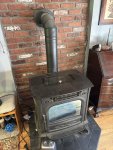
Our stoves have top vent adapter option that plumbs it to a normal 6” wood stove chimney…….I think @dirtydeed runs his same way.
Probably my biggest ongoing concern with pellets is their availability and cost.
Many years ago (15?- after the 2008/09 recession) pellets were scarce and I was stocking up in May. Lately I haven’t had an issue with supply, but prices have escalated significantly. I’m at $450 +/- per ton, where it used to be $250 +/-
Yes, there’s 3 motors and 2 blowers. I don’t notice the sound, but we’ve had it 20 years. I’ve changed out nearly all the parts of the stove multiple times over the years. It’s had 100 tons through it…..
There’s pros and cons. My pellet stove paid for itself each year while I was working. Now retired, I have more time to tend to a wood stove.
The good stoves are worth the extra money. @dirtydeed and I both have Harman XXV stoves; someone else does also if I recall.
Our stoves have top vent adapter option that plumbs it to a normal 6” wood stove chimney…….I think @dirtydeed runs his same way.
Probably my biggest ongoing concern with pellets is their availability and cost.
Many years ago (15?- after the 2008/09 recession) pellets were scarce and I was stocking up in May. Lately I haven’t had an issue with supply, but prices have escalated significantly. I’m at $450 +/- per ton, where it used to be $250 +/-
Yes, there’s 3 motors and 2 blowers. I don’t notice the sound, but we’ve had it 20 years. I’ve changed out nearly all the parts of the stove multiple times over the years. It’s had 100 tons through it…..
Last edited: