Had the power company gone and turned the power off, they probably would have sued because of the interruption.I was reading that a couple is suing the power company for not turning off the power due to high winds.
![]()
Hawaiian couple suing power companies over Lahaina destruction amid historic Maui wildfires
Hawaiian couple Monica and Rede Eder is suing four power companies in Hawaii and accusing them of ignoring warnings to turn off power amid the historic wildfire conditions.www.foxnews.com
It’s been many years, but recall seeing some photos of some of the drinking water infrastructure in Hawaii.Some of you guys apparently have never been there. The infrastructure on some of the islands is very behind the times.
What a shame. Houses and property can be rebuilt but irreplaceable, exceptional nature like that old tree...gone forever.Very sad to see the loss of life and property there. My wife and I have visited many times.
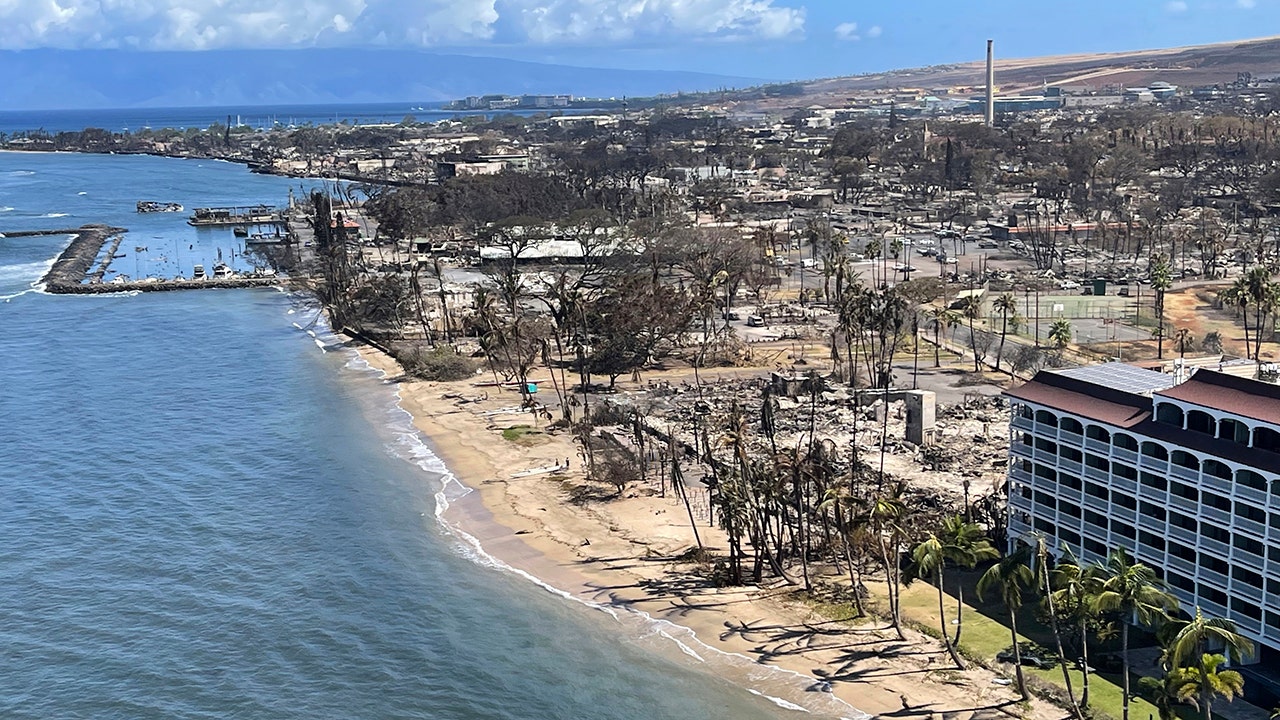
I understand that Front St in Lahaina is pretty much gone including this historic 150 year old tree
View attachment 108982
i would imagine that there are many suits for different reasons.I was reading that a couple is suing the power company for not turning off the power due to high winds.
![]()
Hawaiian couple suing power companies over Lahaina destruction amid historic Maui wildfires
Hawaiian couple Monica and Rede Eder is suing four power companies in Hawaii and accusing them of ignoring warnings to turn off power amid the historic wildfire conditions.www.foxnews.com
NO.These are the things that happen when you elect,,,,,,,,,,,,,
There are already a lot of points made in the thread, but the main ones are the notification system didn't work, cellphone coverage is bad over much of the island which contributed to lack of communication, and the geography of that part of Maui and wind.I'm having a hard time understanding how so many people got caught up in this fire?
Frankly, you seem to be making things up. There aren't "wetlands" there, or anything close to wetlands in hardly any part of Hawaii. They were created by volcanic eruptions.This is what happens when you pave over your wetlands or fill them in for housing.
Description of State’s WetlandsThere are already a lot of points made in the thread, but the main ones are the notification system didn't work, cellphone coverage is bad over much of the island which contributed to lack of communication, and the geography of that part of Maui and wind.
I was on Oahu during that time, there were extremely high winds for the days previous and during. Of course, high winds make little fires huge in short order.
If you look at the map of Maui, and a fire is coming your way, there isn't a lot of places to go other than the water. Most of the beaches on the Lahaina side of the island have steep drop-offs and the waves were higher than normal due to the unusual prevailing winds.
Frankly, you seem to be making things up. There aren't "wetlands" there, or anything close to wetlands in hardly any part of Hawaii. They were created by volcanic eruptions.
Concrete and asphalt doesn't burn very well and that island isn't very developed. Lahaina had very little new building and still burned to the ground. It was originally the main port for whaling. Larger hotels/resorts have mostly low grass around the entire properties and golf courses.
Pretty much the 'Perfect Storm' with respect to the situation.I'm having a hard time understanding how so many people got caught up in this fire?
Realize a few things:
- I have never been to Hawaii, so besides what I know about tropical islands from Gilligan's Island, I don't know anything about the terrain.
- Was/is the terrain such that escape wasn't possible?
- I hear reports that no warning was put out, yet, if you see a large wall of fire coming your direction wouldn't you leave?
- Does Hawaii lack the infrastructure that most States have to be able to deal with something like this?
I have tried to watch some of the so called news reporting, but besides the emotional drama, there isn't much details there. I know you see reports in the wildfires out west of those that stay behind to defend their property, but I don't believe that was the case here. The largest brush/field fire I have dealt with was about 300 acres and the farmers did all the work while we took care of the hotspots and watched over a few buildings, you got to love those big disc. I fully realize brush/field fires in the Midwest are completely different than anything out west and I'm assuming, on an island.
So, I'm just having a hard time understanding this death toll and how it occurred.
Thank you for the explanation.Pretty much the 'Perfect Storm' with respect to the situation.
1. Very dry conditions. Basically a tinderbox of structures and brush for fuel.
2. Siren network (one of the largest in the world) was never activated. Perhaps already disabled by loss of power? Leaving cell phone and broadcast ability as the only warning system.
3. Fire advanced VERY rapidly. For the most part a low lying fire consuming and 'jumping' from one structure to the next. It is estimated that at certain times (driven by the wind) the fire advanced at nearly a mile a minute (that is 60 mph). In any case, it happened quickly if only 1/3 that speed.
4. A good number of the dead will be the elderly, either not aware of the approaching fire or unable to flee from it. It takes a while for a structure to burn down....but only seconds to succumb to the heat and smoke of wildfire. It was hot enough in some instances to melt metal.
Very sad event....but not altogether unpredictable.
Not really any different than those who live/build on the Southern Coastline (Stateside). Eventually.... a hurricane is going to effect you. Its a gamble.
I heard the same thing. The winds were gusting to 60 mph caused by some distant hurricane. The fire moved at about a mile/minute. Add to that the wind created by such a fire (sucking in air). I think you'd have to be very lucky to be able to outrun a blaze moving at that speed.Pretty much the 'Perfect Storm' with respect to the situation.
3. Fire advanced VERY rapidly. For the most part a low lying fire consuming and 'jumping' from one structure to the next. It is estimated that at certain times (driven by the wind) the fire advanced at nearly a mile a minute (that is 60 mph). In any case, it happened quickly if only 1/3 that speed.